In professional salons and the global B2B hair market, few topics create as much discussion as tape in vs i tip extensions. Both methods are widely used, both deliver natural results, and both serve very different client needs. Yet many buyers struggle to decide which one fits their business model, client lifestyle, or hair type best.
The challenge with i-tip vs tape-in extensions is that the differences are not always obvious at first glance. One method focuses on speed and flat application. The other emphasizes flexibility and strand-by-strand control. Without a clear comparison, it is easy to make choices based on trends rather than suitability.
This article breaks down tape in vs i tip extensions in a simple and structured way. By the end, you will understand how each method works, where each one excels, and which option makes the most sense for different situations.
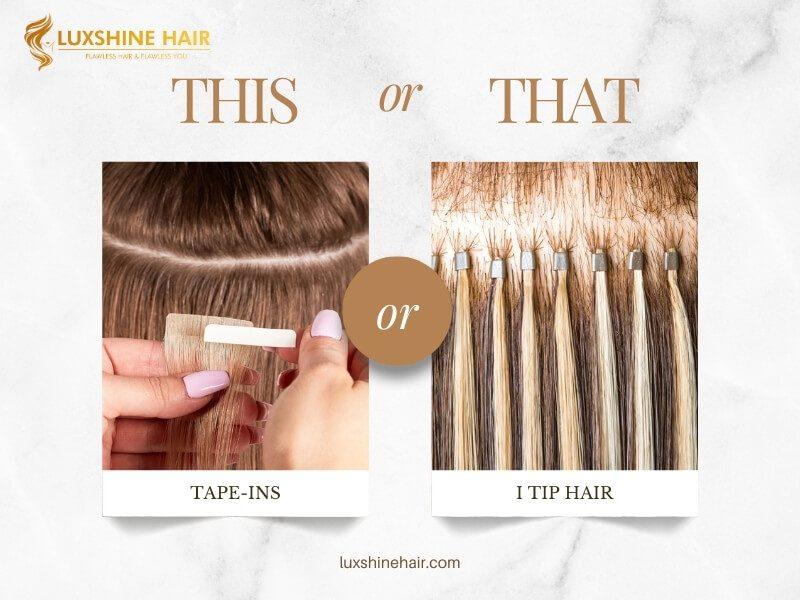
Overview of Tape In and I Tip Extensions
Before diving deeper into tape in vs i tip extensions, it is important to understand how each method works on its own. Each technique was designed to solve different problems in hair extension services.
What are Tape In Hair Extensions?
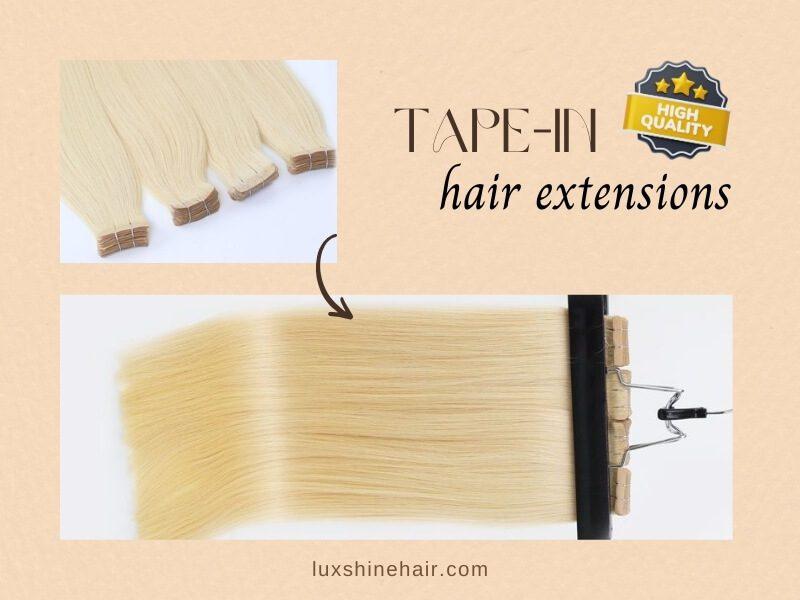
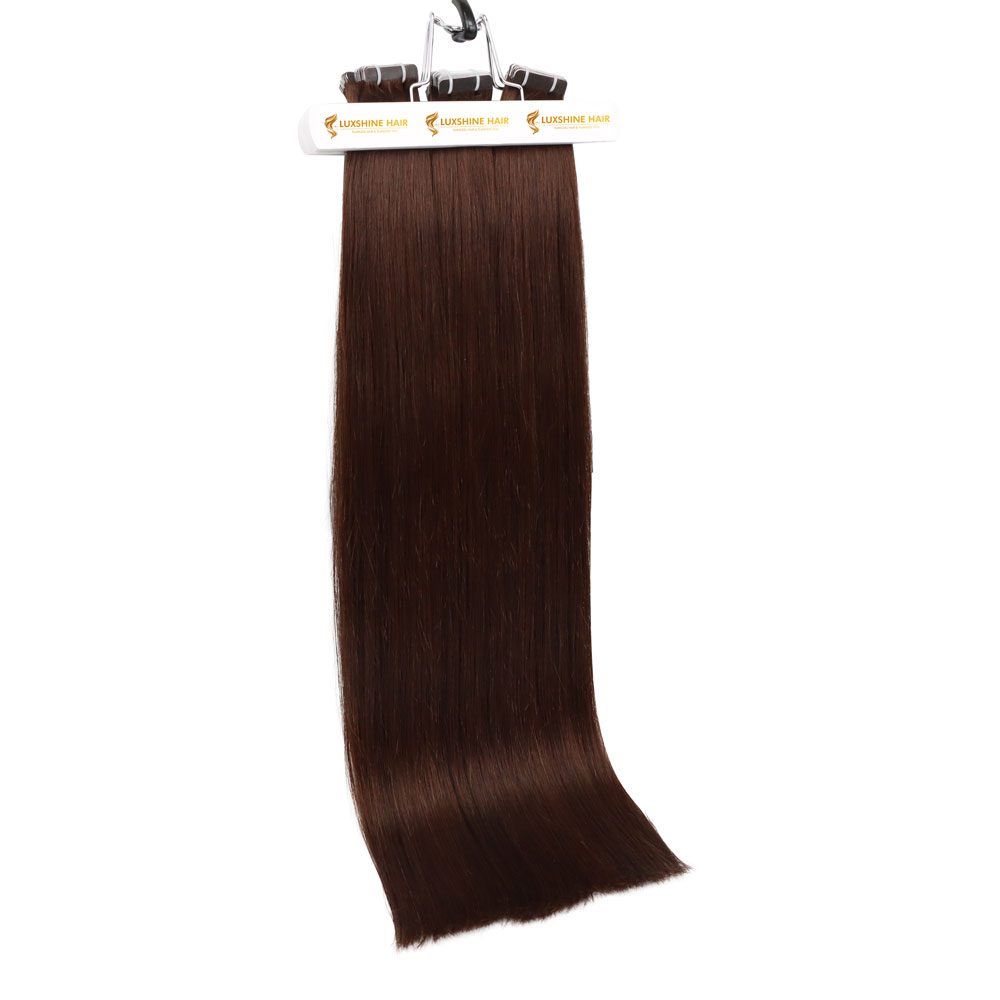
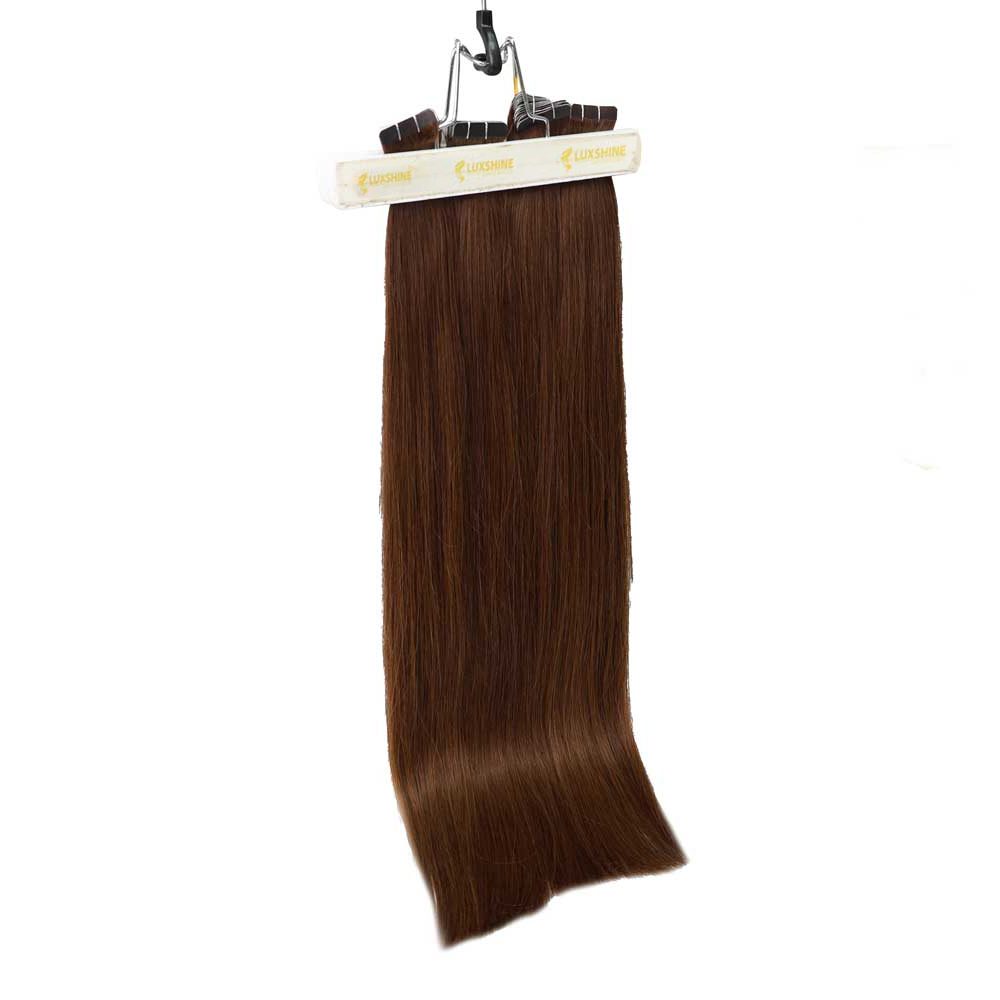
Tape-in extensions are a method of hair extension using adhesive tape to attach wefts of hair to natural strands. The extensions come in thin, flat panels with medical grade adhesive on one side. During installation, a small section of natural hair is placed between two tape wefts, creating a sandwich-like attachment.
This method has become extremely popular because of its speed and smooth finish. Tape-in extensions lie flat against the scalp, making them less visible and more comfortable for many clients.
I often recommend tape-in extensions to salons that focus on speed and volume services. When a client wants a full transformation in a short time, tape-in is usually the first option I suggest.
Advantages of Tape-In Extensions
- Very fast installation compared to strand methods
- Flat and lightweight feel on the scalp
- Natural look when installed correctly
- Easy removal with adhesive solution
- Reusable with proper care and re-taping
Disadvantages of Tape-In Extensions
- Adhesive can weaken with oil or improper washing
- Less flexibility in precise placement
- Requires careful maintenance to avoid slipping
- Not ideal for very oily scalps
In many tape-in vs i-tip extensions discussions, tape-in is seen as the best option for speed and efficiency.
What are I-Tip Hair Extensions?
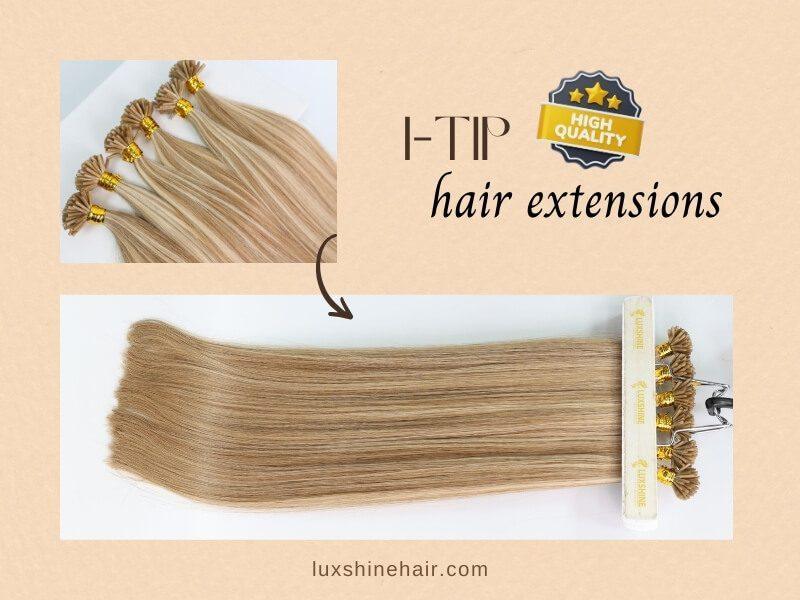
I-tip extensions are individual strands tipped with a small keratin or resin cylinder. The strands are attached using micro beads or rings without heat or glue. A stylist pulls natural hair through a bead, inserts the i-tip strand, and clamps the bead closed.
This method is often recommended for clients who want flexibility and minimal chemical exposure. Since there is no adhesive involved, i-tip extensions rely purely on mechanical attachment.
Advantages of I-Tip Extensions
- No heat or adhesive involved
- High flexibility in placement
- Easy to adjust or move up
- Suitable for sensitive scalps
- Reusable multiple times
Disadvantages of I-Tip Extensions
- Longer installation time
- Beads may be felt on very fine hair
- Requires regular maintenance visits
- Improper clamping can cause slipping
When comparing tape-in vs i-tip extensions, i-tip is often chosen for control and adaptability.
If you want a deeper explanation of this method, you can naturally transition to our detailed guide: What Are I-Tip Hair Extensions, which explores structure, materials, and professional use in more detail
Comparison of the Two Types: I Tip vs Tape In Extensions
Now that you understand the basics, it is time to look at tape in vs i tip extensions side by side. The table below highlights the most important factors that influence real-world use.
|
Factor |
Tape-In Extensions |
I-Tip Extensions |
|
Application |
Adhesive tape wefts |
Micro bead strand method |
|
Installation Time |
Fast |
Slow |
|
Styling |
Limited updos |
Very flexible |
|
Care |
Oil free products needed |
Standard gentle care |
|
Removal |
Adhesive remover |
Bead unclamping |
|
Maintenance |
Every 6 to 8 weeks |
Every 6 to 10 weeks |
|
Best For |
Quick transformations |
Custom and precise looks |
This table gives a snapshot of tape in vs i tip extensions, but each factor deserves a closer look.
Application
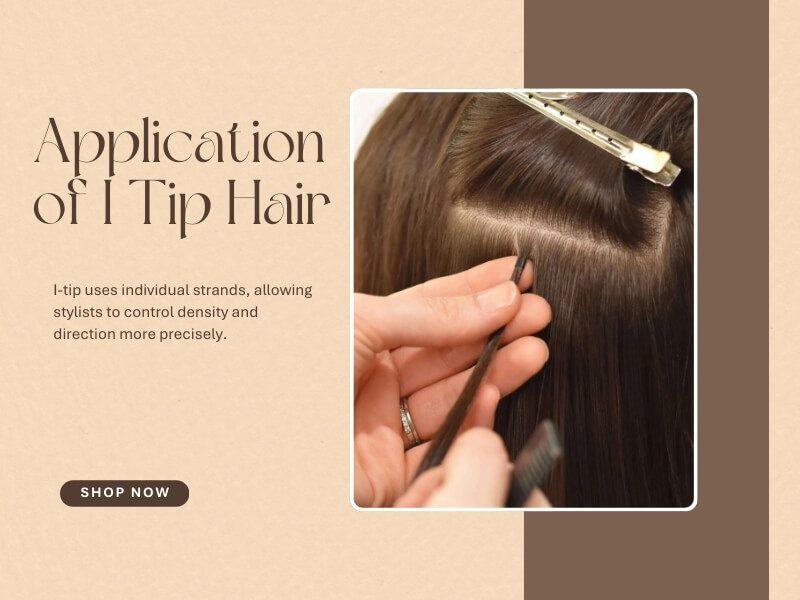
Application is one of the biggest differences in tape in vs i tip extensions. Tape-in relies on adhesive bonding across a flat surface. This spreads weight evenly but limits placement options. I-tip uses individual strands, allowing stylists to control density and direction more precisely.
Clients with uneven hair density, i-tip often provides better customization. Clients who want a fast service, tape-in wins.
From my experience, for uneven hairlines or layered cuts, i-tip almost always delivers better results.
Installation time
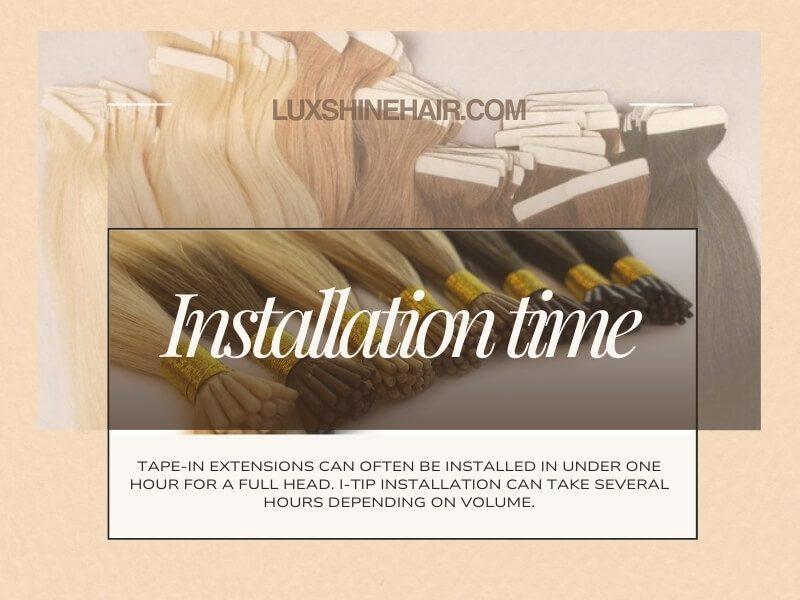
Installation time heavily influences salon workflow. Tape-in extensions can often be installed in under one hour for a full head. I-tip installation can take several hours depending on volume.
In my daily work, I realized that busy salons prefer tape-in for walk-in clients. Premium salons that charge higher service fees often choose i-tip.
Styling Flexibility
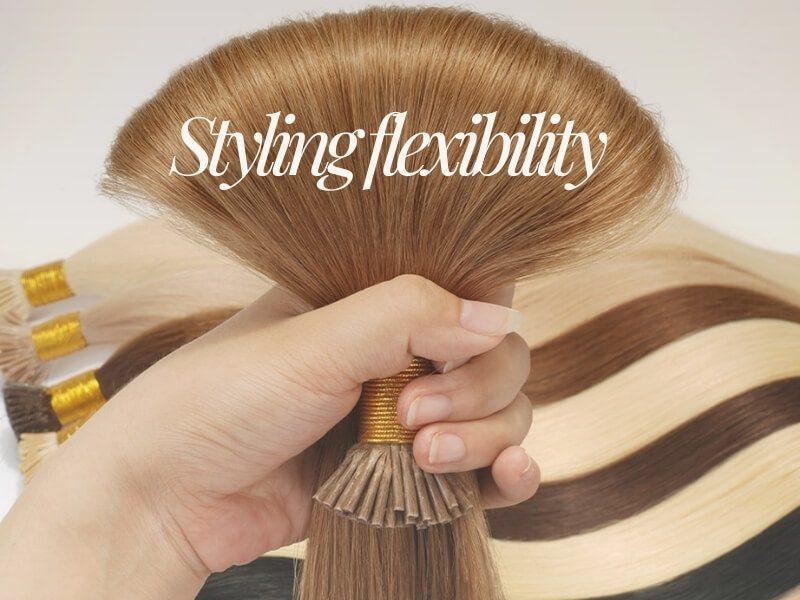
Styling freedom is another major factor in tape in vs i tip extensions. Tape-in wefts lie flat but can be visible in high ponytails or tight updos. I-tip strands move independently, making them easier to style in complex looks.
I often hear this from clients: “I love tape-in for daily wear, but i-tip gives me more freedom for special events.”
Care Requirements
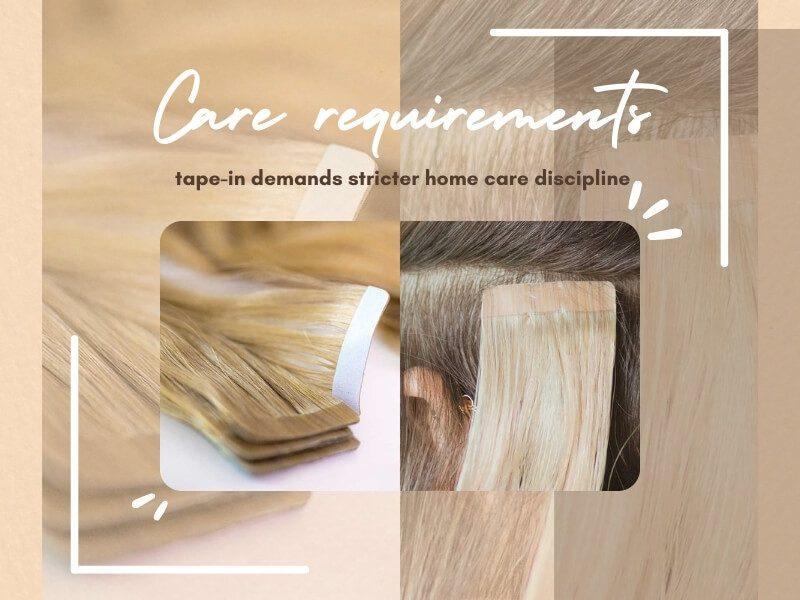
Tape-in extensions require oil free products near the adhesive area. Oils can weaken the tape bond. I-tip extensions allow more flexibility in product choice but still require gentle handling.
From real feedback that I have received, clients who dislike strict care rules often feel more relaxed with i-tip.
I think that tape-in demands stricter home care discipline.
Removal
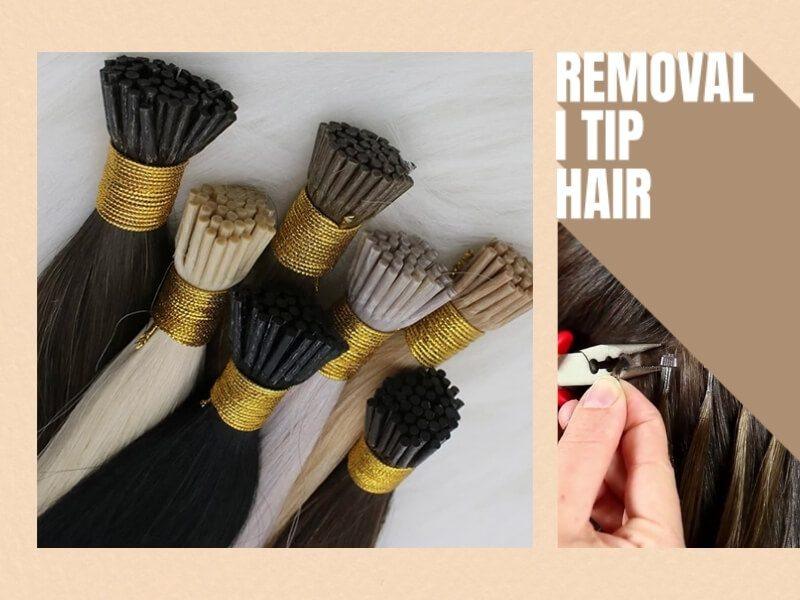
Removal is simpler for tape-in extensions using a specialized adhesive solution. The wefts slide off cleanly when done correctly. I-tip removal involves unclamping each bead, which takes more time but leaves no residue.
Don’t be like me, trying to remove tape-ins at home without the right technique; the result was that I still had to go back to the salon to have it redone. It was a waste of time, damaged my natural hair, and cost me money to fix it all.
In my opinion, both methods are safe when removed by professionals. Poor technique causes most problems, not the method itself.
To avoid the mistakes I made and keep your natural strands healthy, make sure you follow a professional guide on how to remove tape in hair extensions step-by-step.
Maintenance Schedules
Maintenance timing is similar in tape in vs i tip extensions, but the process differs. Tape-in wefts are removed, cleaned, and re-taped. I-tip strands are moved up and re-clamped.
Clients who dislike long maintenance appointments often prefer tape-in.

The Best Use Cases
Tape-in extensions are best for clients who want fast results, flat comfort, and medium-term wear. I-tip extensions suit clients who want full control, minimal chemicals, and flexible styling.
There is no universal winner in tape in vs i tip extensions, only better alignment with needs.
With Luxshine Hair’s long experience providing hair extensions, we also receive a lot of questions about “tape-in vs i-tip extensions” from wholesalers and salon owners.
In our opinion, tape-in extensions often sell faster due to ease of installation and lower labor cost. I-tip extensions attract premium clients who value customization and are willing to invest more time and money.
A balanced inventory that includes both options allows businesses to serve wider markets. This approach reduces dependence on a single trend and improves long-term stability.
Conclusion: Choose Quality First, Method Second
Choosing between tape in vs i tip extensions should always start with hair quality and supplier reliability. Even the best method fails if the hair is inconsistent or poorly processed.
At Luxshine Hair, we specialize in premium Vietnamese human hair for both tape-in and i-tip extensions. We support salons, distributors, and hair brands with transparent sourcing, consistent quality, and flexible customization.
If you are still deciding between tape-in vs i-tip extensions, our team can help you choose the right solution based on your clients, market, and long-term business goals.
Contact Luxshine Hair via (+84) 862 552 088 today to build a reliable and scalable hair extension business with confidence.


 Vietnamese Hair Extensions
 Best Selling Products
 About us
 Contact Us
 Wholesale Hair Vendor
 Luxshine Hair Blog