When discussing Vietnamese hair vs Chinese hair, the question is not simply which hair is “better.” For B2B buyers, salon owners, distributors, and hair brands, the more important question is: Which production ecosystem aligns with your target customers, business model, and long term growth strategy?
As someone who has spent many years in the hair extension industry and currently serves as the head of Luxshine Hair, I have worked with clients who source from both countries. In this guide, I will objectively compare the two ecosystems, helping you understand the strengths, limitations, and ideal use cases of each option.
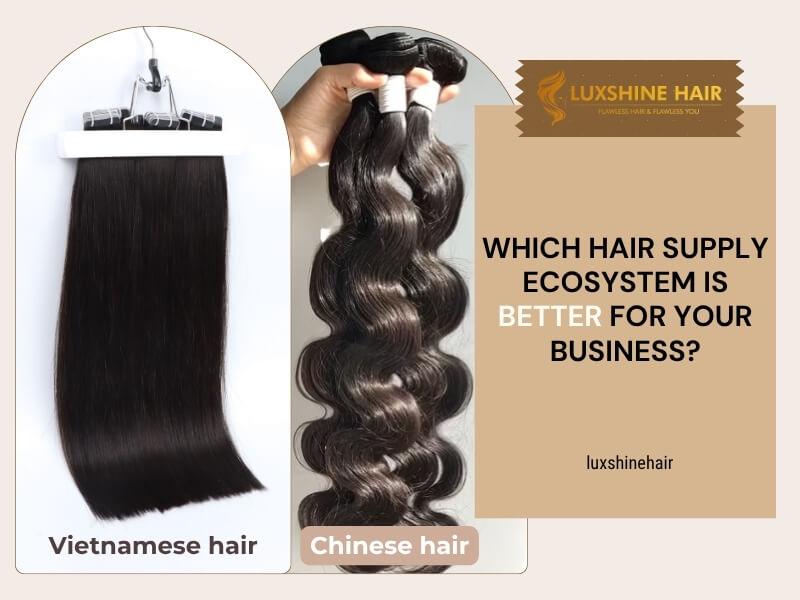
Comparison of Vietnamese and Chinese Hair
Before comparing specific factors, it is important to understand that Vietnamese hair vs Chinese hair is not simply a comparison between two hair types.
In reality, you are comparing two completely different production ecosystems.
Vietnam’s industry is largely centered around collecting raw hair and processing it through factory-based manufacturing. China’s industry combines large factories, sourcing companies, traders, wholesalers, and export networks into one highly integrated supply chain.
The following comparison will help you evaluate which ecosystem matches your business goals.
Many first-time buyers compare only sample quality. Experienced distributors compare supply chains because supply chains determine whether quality can be repeated at scale.
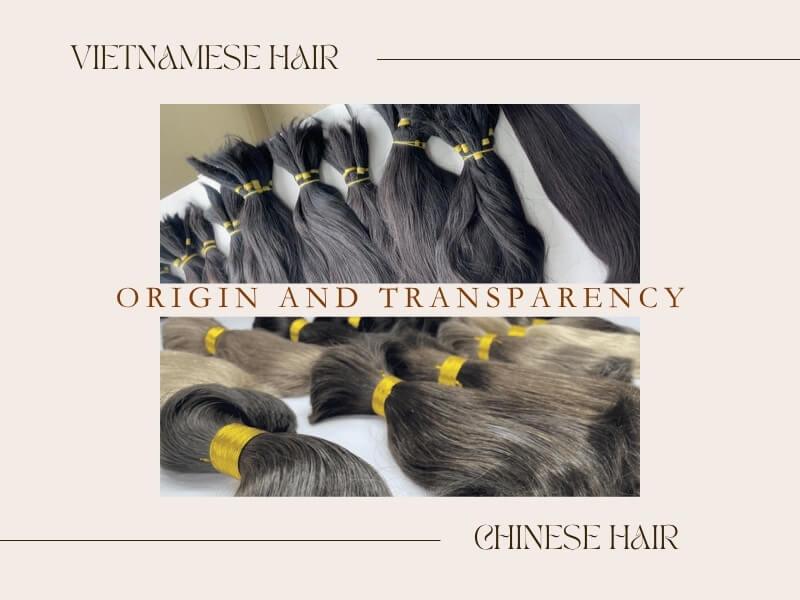
Origin and Transparency
Where does the hair actually come from?
|
Vietnamese Hair |
Chinese Hair |
|
Often sourced from individual donors in rural and mountainous areas |
Sources may include domestic collections and imported hair |
|
Single donor hair commonly available |
Hair may be collected from multiple sources |
|
Raw and virgin hair options widely offered |
Raw hair options exist but vary by supplier |
|
Easier traceability with direct factory sourcing |
Supply chain may involve multiple intermediaries |
Vietnam has become known for supplying raw and virgin hair collected from women who traditionally maintain long hair. In many regions, natural ingredients such as soapberry and pomelo peel water are still used in hair care routines.
Chinese suppliers operate within a much larger ecosystem. Due to the enormous manufacturing demand, many factories supplement local sources with imported hair from countries across Asia.
Some buyers mention terms such as “floor hair” or “comb waste.” While these materials do exist within certain segments of the global hair industry, they should not be assumed to represent all Chinese suppliers. Reputable Chinese factories also maintain strict sourcing standards.
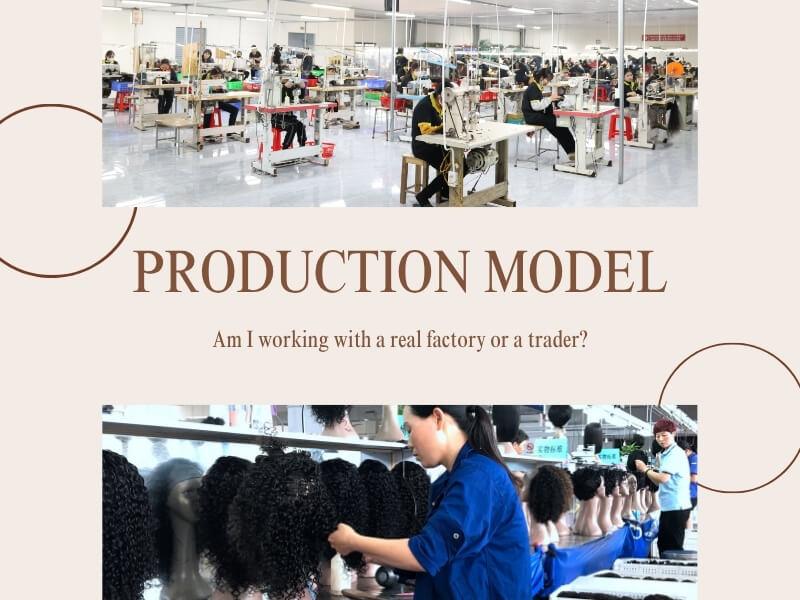
Production Model
Am I working with a real factory or a trader?
|
Vietnamese Hair |
Chinese Hair |
|
Strong factory-direct culture |
Combination of factories and trading companies |
|
Direct communication with production teams |
Often multiple sourcing layers |
|
Easier factory visits |
Large sourcing networks available |
|
Customized production common |
Wide product variety available |
Vietnam’s industry is largely factory focused. Buyers frequently communicate directly with manufacturers, which can simplify quality discussions.
China operates a highly developed manufacturing and trading ecosystem. Many suppliers are genuine factories, while others specialize in sourcing, logistics, and product consolidation. Some of the largest Chinese suppliers never manufacture hair themselves. Their expertise lies in sourcing products from multiple factories and consolidating orders for international buyers.
Neither model is inherently better. It depends on your business goals.
If you need customized production and direct communication, factory-focused sourcing may be attractive.
If you want access to a vast catalog of products from one supplier, the Chinese ecosystem offers advantages.
Quality Control Process
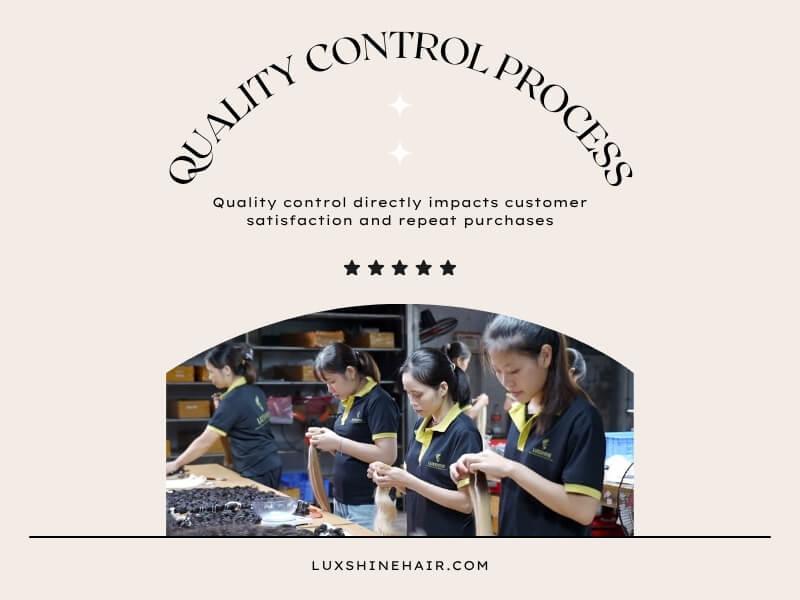
Quality control directly impacts customer satisfaction and repeat purchases.
|
Vietnamese Hair |
Chinese Hair |
|
Semi-manual sorting and inspection |
Highly automated production lines |
|
Less intensive processing for raw hair |
Larger use of industrial processing |
|
Focus on preserving natural cuticles |
Focus on standardized appearance |
|
Smaller production batches |
Larger production batches |
In many Vietnamese factories, workers manually sort hair according to length, texture, and color before production.
Chinese factories often rely on advanced machinery to process large volumes efficiently.
Neither approach guarantees better quality. What matters is whether the factory has clear quality checkpoints throughout production.
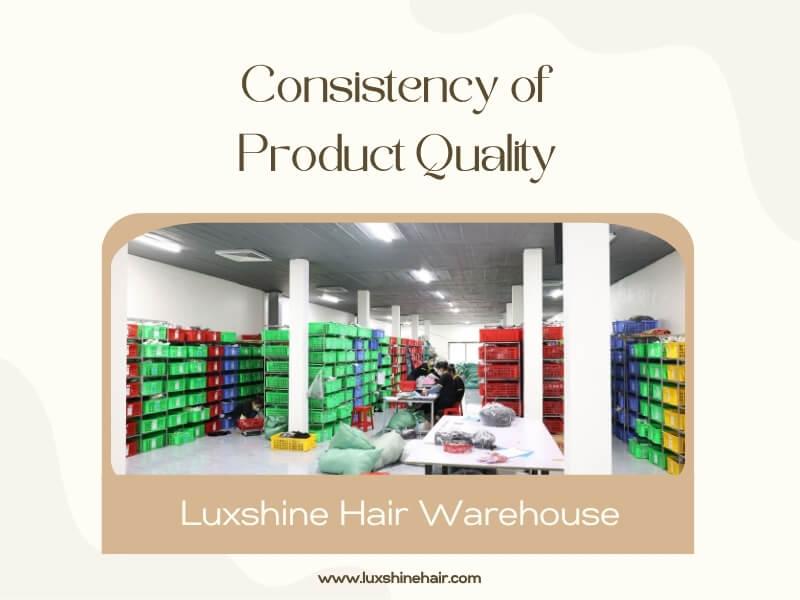
Ensuring Consistent Product Quality Across Orders
If my first order is excellent, will my second order be identical?
|
Vietnamese Hair |
Chinese Hair |
|
Stable sourcing channels may support consistency. |
Large sourcing networks provide flexibility. |
|
Easier to maintain similar texture and thickness when working with the same factory. |
Consistency depends on supplier standardization systems. |
|
Often suitable for repeat premium orders. |
Suitable for both premium and mass-market programs. |
For example, if your first order is 10 kg and your second order is 20 kg and third order is 50-100kg maintaining identical characteristics becomes challenging regardless of supplier location.
A professional supplier should never promise “100% identical hair forever.” What matters is having documented standards that keep variation within acceptable limits.
Scalability and Production Capacity
Who can fulfill large orders faster?
|
Vietnamese Hair |
Chinese Hair |
|
Medium to large production capacity |
Extremely large production capacity |
|
Strong for premium orders |
Strong for bulk orders |
|
Longer lead times during peak seasons |
Faster mass production capability |
|
Growing manufacturing infrastructure |
Mature industrial ecosystem |
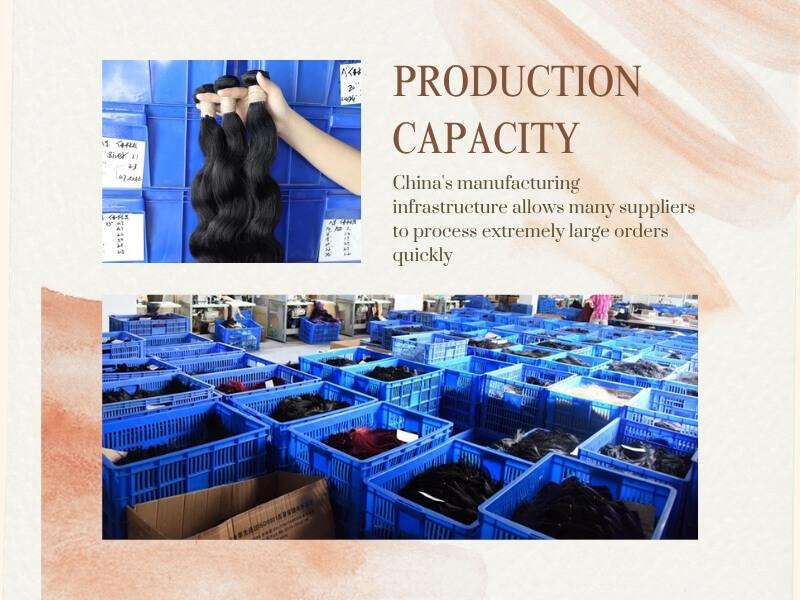
When discussing Chinese vs Vietnamese hair, production capacity is one area where China has a significant advantage.
China’s manufacturing infrastructure allows many suppliers to process extremely large orders quickly.
Vietnam continues to expand production capacity, but premium raw hair availability naturally limits supply volume.
For large distributors requiring hundreds of kilograms monthly, production planning becomes essential.
Hair Thickness Classification Standards
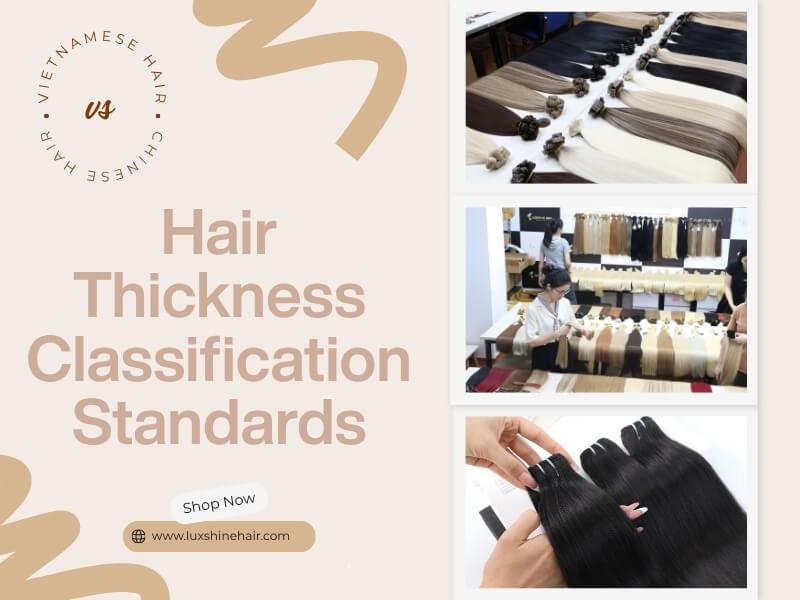
Thickness classification is often confusing for new buyers.
|
Vietnamese Hair |
Chinese Hair |
|
Single Drawn |
8A Grade |
|
Double Drawn |
9A Grade |
|
Super Double Drawn |
10A-15A Grade Marketing Systems |
|
Based on short-to-long hair ratio Widely used in professional wholesale transactions |
Primarily marketing-based grading Widely used in retail marketing. |
The challenge is that these grades are not standardized across the industry.
A 12A bundle from one supplier may be thinner than a 9A bundle from another supplier because there is no universal grading authority.
When comparing Vietnamese hair vs Chinese hair, always request density specifications rather than relying solely on grade names.
Cost Structure and Pricing
This section is not about which product is cheaper.
The real question is: “Why do prices differ?“
|
Vietnamese Hair |
Chinese Hair |
|
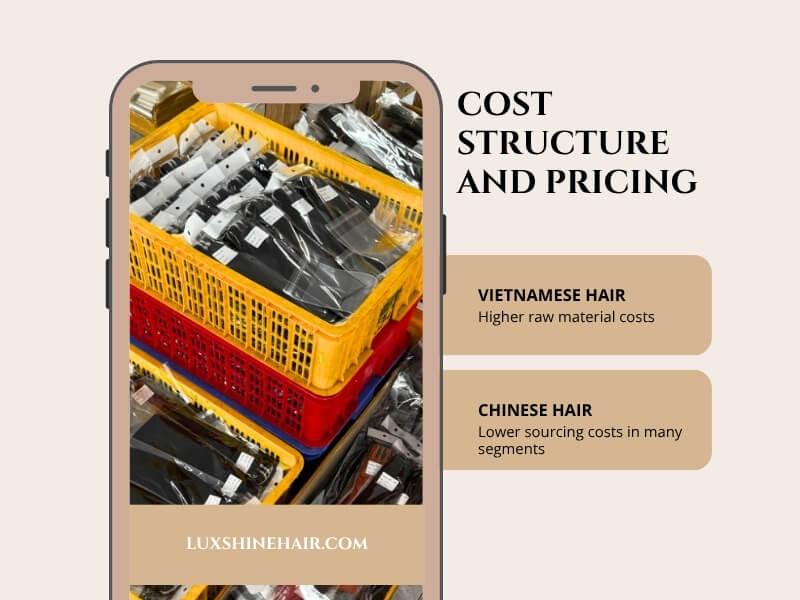
Higher raw material costs |
Lower sourcing costs in many segments |
|
Limited donor supply |
Larger sourcing network |
|
More labor-intensive sorting |
Greater automation |
|
Premium positioning |
Broad pricing spectrum |
The price difference in Vietnamese hair vs Chinese hair usually starts with raw material costs.
Vietnamese raw hair often comes from limited donor networks.
Chinese manufacturers benefit from larger sourcing channels and economies of scale.
As a result, pricing reflects much more than labor costs. It reflects sourcing, processing, logistics, inventory, and production methods.
Always requesting density photos, end thickness photos, and actual weight specifications instead of relying solely on 12A or 15A labels.
Market Insights
Choosing between Vietnamese hair vs Chinese hair should be based on your customer segment.
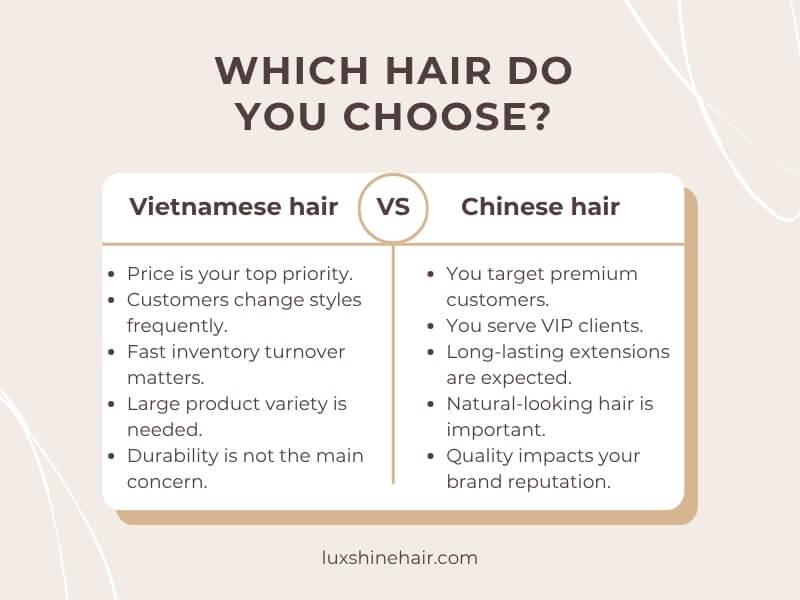
Choose Chinese Hair When:
- Your customers are highly price sensitive.
- Customers frequently change colors and styles.
- Durability is not the primary concern.
- Fast inventory turnover is important.
- You need access to large product catalogs.
Choose Vietnamese Hair When:
- Your salon targets luxury customers.
- You serve VIP clients or celebrities.
- Clients expect long-lasting extensions.
- Natural appearance is a key selling point.
- Hair longevity affects your brand reputation.
As I often tell distributors: “The best supplier is not the one with the highest quality. It is the one whose products match your customers’ expectations.”
That principle applies throughout the entire Chinese hair vs Vietnamese hair discussion.
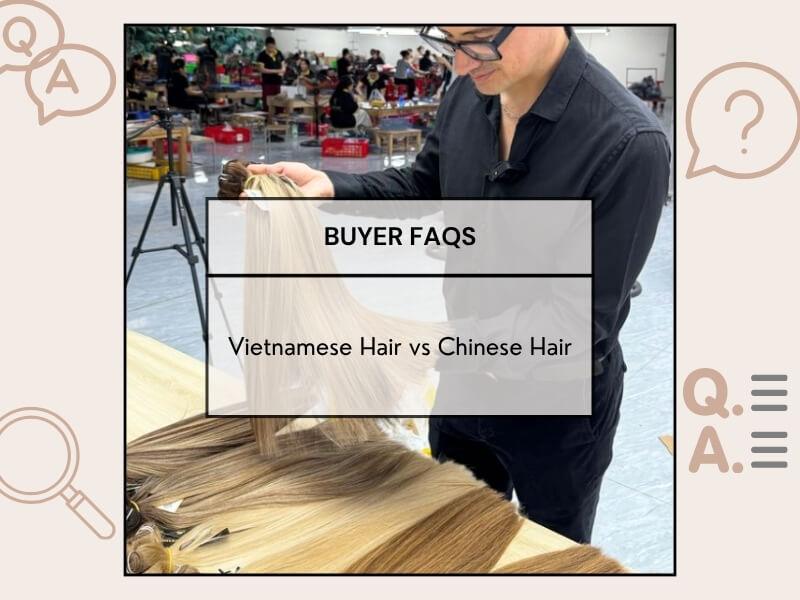
Buyer FAQs: Vietnamese Hair vs Chinese Hair
How Can I Know If A Vendor is Selling Chinese Hair Mixed into Vietnamese Hair?
Request sourcing documentation, production videos, and consistency reports. Also compare multiple orders rather than relying on a single sample.
Can I Dye or Bleach Chinese Hair To #613 Blonde Like Vietnamese Hair?
Yes. Both can be processed to #613 blonde. However, results depend more on the original hair condition and previous chemical processing than country of origin.
Do Vietnamese Have Curly Hair?
Yes. While naturally straight hair is most common, some Vietnamese people have naturally wavy or curly hair.
Deep Dive: Want to understand the genetic origins of these textures and how factories process them into popular wavy/curly extension styles without damaging the cuticles? Read our detailed exploration: Do Vietnamese Have Curly Hair
How Do Shipping Times And Logistics Fees Compare Between Ordering From China Vs Vietnam?
Both countries have strong export infrastructure. Shipping times typically depend on production schedules, destination country, and shipping method rather than location alone.
Is Vietnamese Hair Always Better Than Chinese Hair?
No. The Vietnamese hair vs Chinese hair debate is often oversimplified. Both countries have premium suppliers and lower-quality suppliers. Evaluating sourcing transparency, quality control, and supplier reliability is more important than focusing solely on country of origin.
Partner with Luxshine Hair
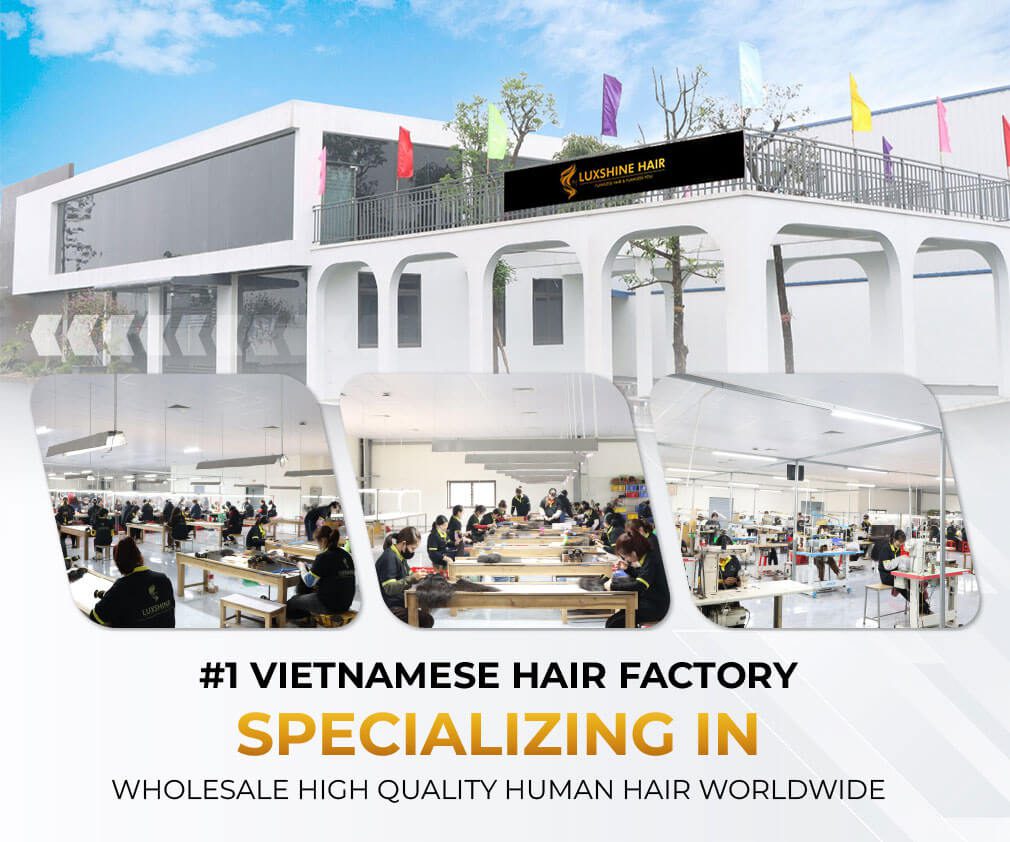
If you are looking for a trusted Vietnamese hair manufacturer with transparent sourcing, factory-direct pricing, and customized production solutions, Luxshine Hair can help.
As someone who has worked with distributors, salon chains, and hair brands worldwide for many years, I understand that successful partnerships are built on consistency, communication, and long-term value.
Whether you are comparing Vietnamese hair vs Chinese hair for the first time or searching for a reliable manufacturing partner, Luxshine Hair is ready to support your business with premium raw hair, private label services, and dedicated B2B assistance.
Contact Luxshine Hair today via WhatsApp +1 912-888-8386 and request a free consultation or product sample to find the right solution for your market.

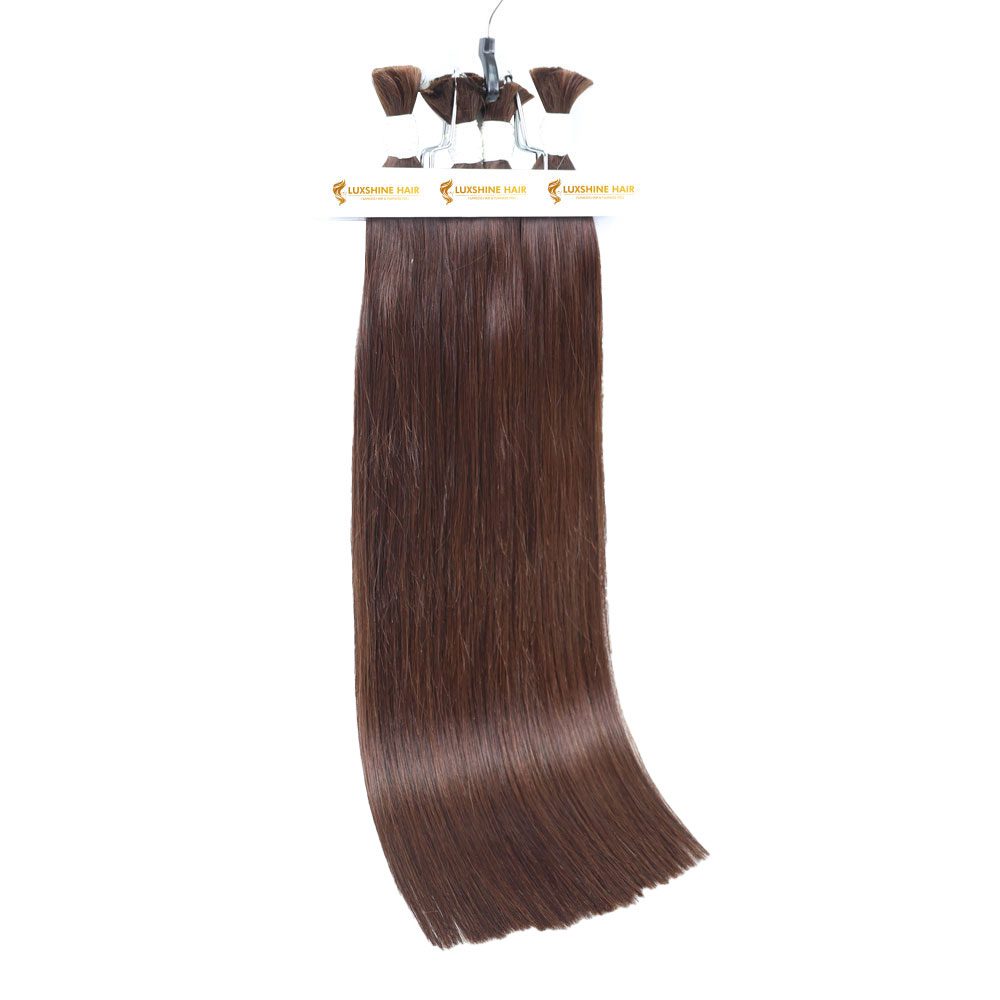
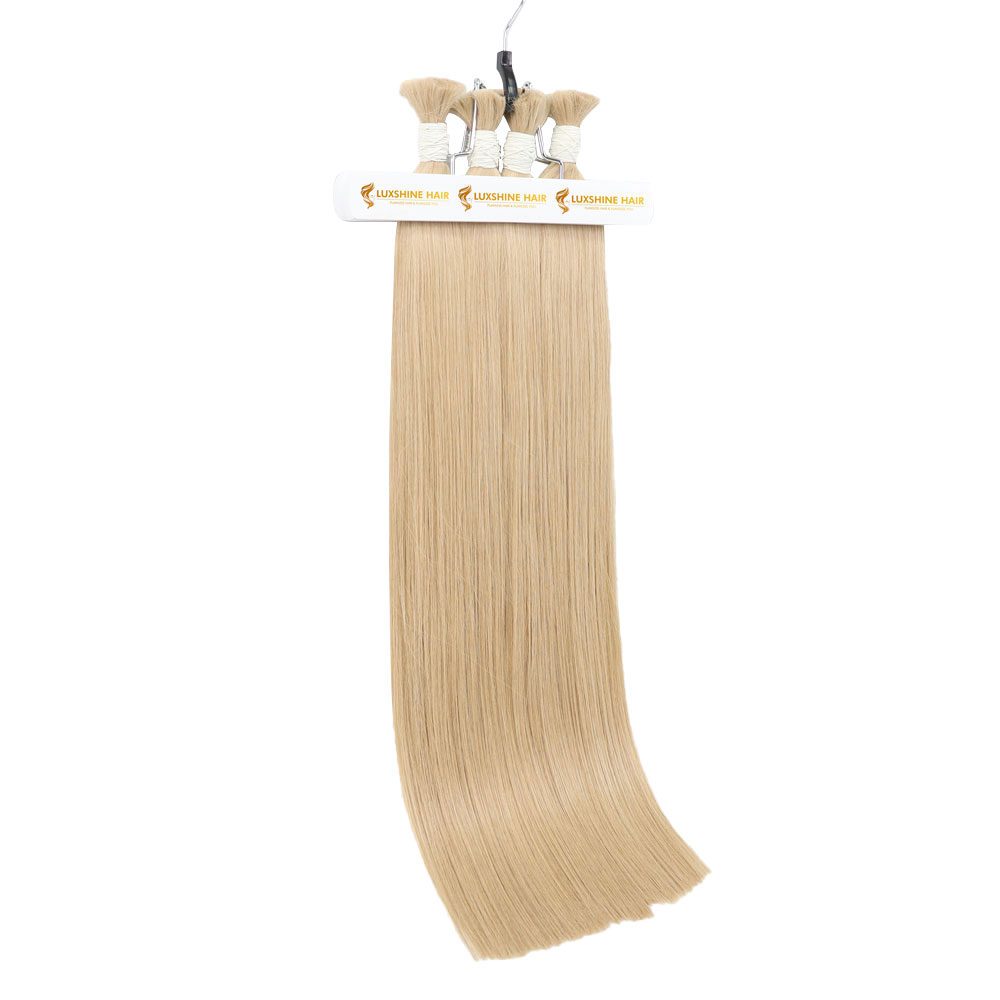
 Vietnamese Hair Extensions
 Best Selling Products
 About us
 Contact Us
 Wholesale Hair Vendor
 Luxshine Hair Blog