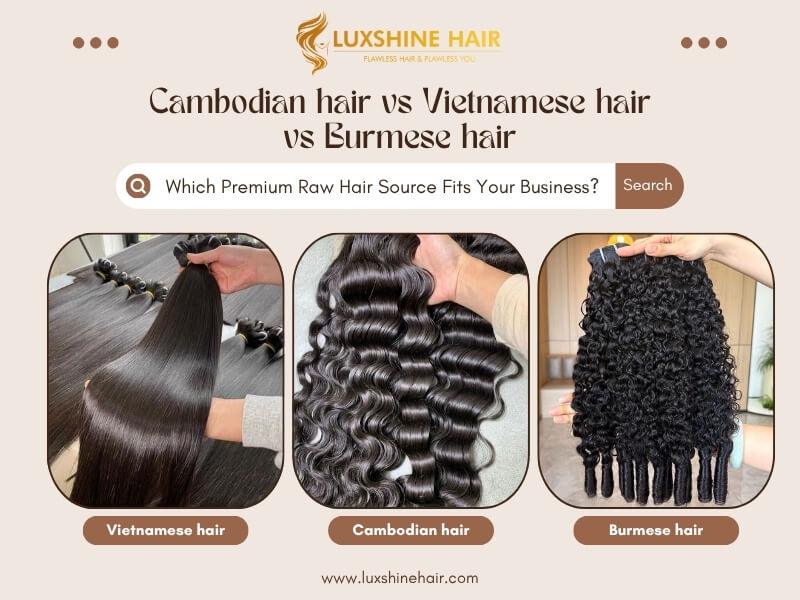
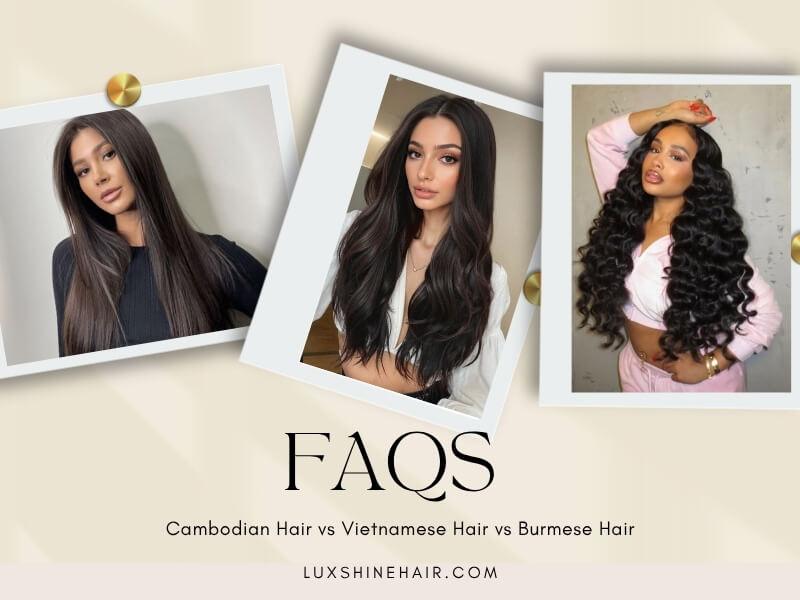
If you’re comparing Cambodian Hair vs Vietnamese Hair vs Burmese Hair, you’re already looking at three of Southeast Asia’s most respected premium Raw Hair sources. Neither is objectively better. They simply serve different business goals.
Choose Vietnamese Hair if you need stable inventory, consistent quality, fast reorders, and a supplier that can scale as your wholesale business grows. Choose Cambodian Hair if your business focuses on exclusivity, boutique collections, and customers who appreciate naturally coarse textures with limited availability. Choose Burmese Hair if you specialize in naturally thick, textured, or curly extensions, especially for Afro-inspired markets where volume is the priority.
As someone who has spent years working directly with international wholesalers, I have learned that choosing a sourcing country is rarely about finding the “best hair.” It is about finding the ecosystem that matches your business model.
Comparing Cambodian Hair vs Vietnamese Hair vs Burmese Hair
Most online articles comparing Cambodian vs Vietnamese Hair vs Burmese Hair spend hundreds of words discussing softness or shine. While these characteristics certainly matter, experienced wholesale buyers usually ask much more practical questions:
- Can I reorder the same quality six months later?
- Will every shipment look identical?
- Can my supplier handle sudden bulk orders?
- How difficult is it to verify authentic Raw Hair?
- Which sourcing ecosystem supports long-term business growth?
Those questions often determine whether your business becomes scalable or constantly struggles with inconsistent inventory.
Instead of asking which country has the “best” hair, I prefer asking a different question:
Which sourcing ecosystem fits your business model? Let’s compare them one factor at a time.
Natural Texture & Overall Feel
|
Cambodian Hair |
Vietnamese Hair |
Burmese Hair |
|
Slightly coarse with natural body |
Naturally silky and smooth |
Thick with stronger natural texture |
|
Soft natural wave is common |
Mostly straight with fluid movement |
Strong natural wave or curl |
|
Medium to thick strand diameter |
Medium and uniform strands |
Thickest strand diameter |
|
Creates a naturally voluminous look |
Creates a sleek luxury appearance |
Creates dense, textured styles |
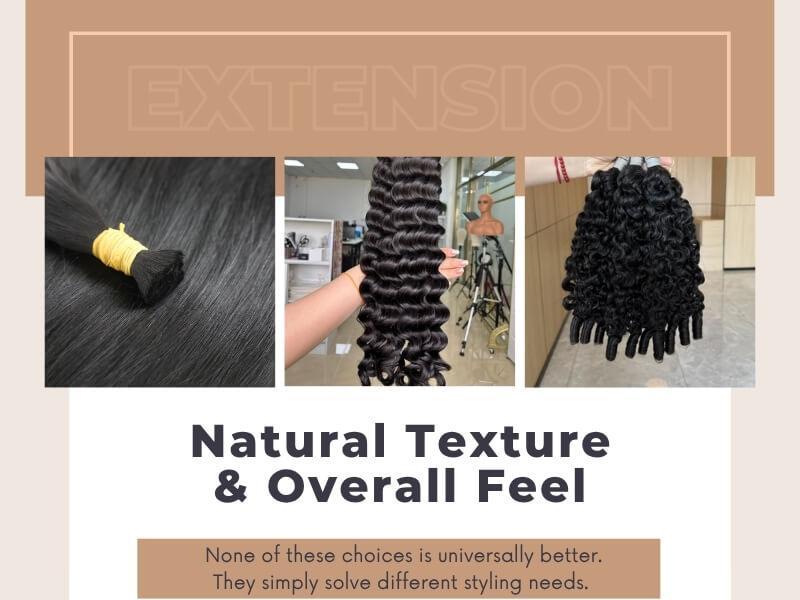
Although all three belong to the premium Southeast Asian Raw Hair category, they feel noticeably different in hand.
Vietnamese Hair is widely recognized for its naturally silky texture.
Cambodian Hair usually feels slightly fuller. Individual strands are often thicker, creating natural volume without requiring heavy styling products. Some bundles also show a gentle natural wave, making them attractive for clients who want body without permanent curls
Burmese Hair stands apart because of its naturally dense structure. It commonly features more texture and stronger natural movement than both Vietnamese and Cambodian hair, making it particularly attractive for textured hairstyles.
Many buyers mistake “coarse” for “low quality.” In reality, strand diameter is primarily determined by donor genetics, while processing mainly affects surface appearance rather than the internal hair structure.
When I work with international wholesalers, texture preference is closely linked to the end market.
Clients seeking polished luxury styles often gravitate toward Vietnamese Hair.
Customers wanting naturally voluminous extensions frequently prefer Cambodian Hair.
Hair professionals serving textured hair markets usually appreciate the fullness offered by Burmese Hair.
None of these choices is universally better. They simply solve different styling needs.
If you’re comparing these Southeast Asian hair types with another premium option, our guide on Vietnamese Hair vs Brazilian Hair explains how texture, softness, and sourcing differ between Asian and South American hair.
Fiber Uniformity
|
Cambodian Hair |
Vietnamese Hair |
Burmese Hair |
|
Moderate donor variation |
Highly uniform donor selection |
Greater donor variation |
|
Village-based collection |
Factory grading system |
Fragmented collection network |
|
More manual sorting required |
Excellent strand consistency |
Consistency varies by supplier |
|
Suitable for boutique production |
Ideal for standardized production |
Better for niche collections |
Small retail buyers may never notice slight differences between bundles. Wholesale businesses absolutely will.
Vietnamese factories generally sort collected hair through multiple grading stages before production begins. Hair with similar strand diameter, density, and length is grouped together, producing remarkably consistent bundles.
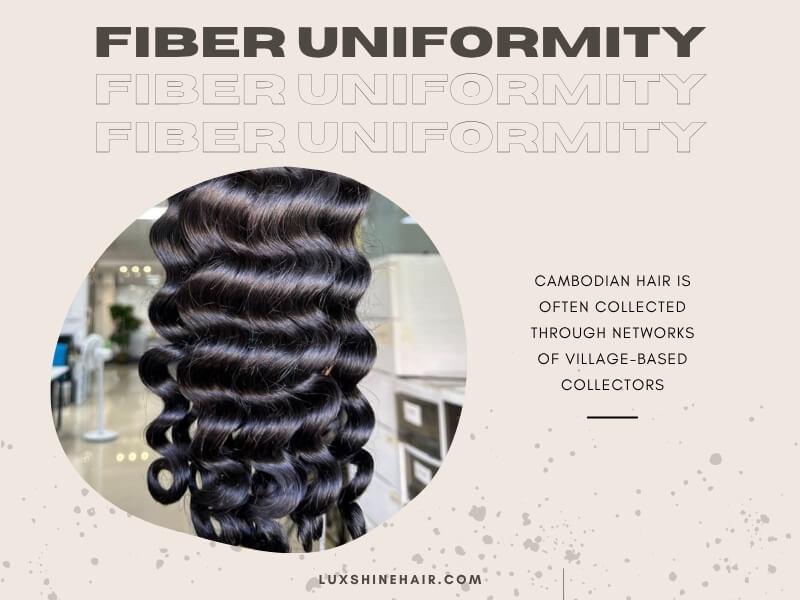
Cambodian Hair is often collected through networks of village-based collectors. Since donor characteristics naturally vary, some differences between bundles can remain even after sorting.
Burmese Hair typically experiences even greater variation because collection networks are relatively fragmented compared with Vietnam’s manufacturing ecosystem.
The larger your monthly purchasing volume becomes, the more valuable fiber uniformity becomes.
Bleach & Color Performance
|
Cambodian Hair |
Vietnamese Hair |
Burmese Hair |
|
Lifts well but varies slightly by donor |
Highly predictable lift |
Good lift with thicker strands |
|
Suitable for professional coloring |
Excellent for blonde transformations |
May require slightly longer lifting time |
|
Minor variation between bundles |
Very consistent bleaching results |
Moderate consistency |
|
Best with experienced colorists |
Excellent for large-scale salon production |
Ideal for customized coloring |
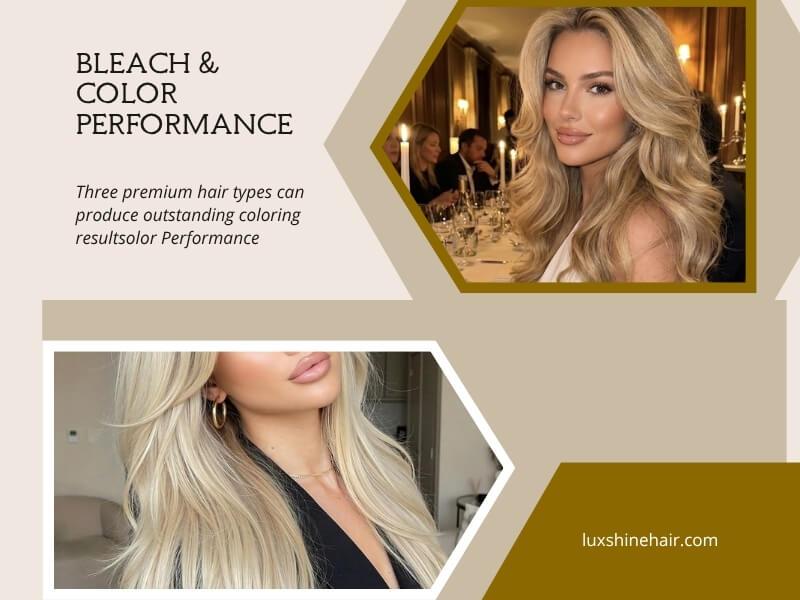
One misconception I often hear is that premium Raw Hair from every country performs identically during bleaching. In practice, that’s rarely true. All three hair types can achieve beautiful blonde shades when they are genuinely raw and properly processed.
Vietnamese Hair generally produces the most predictable bleaching results because factories perform extensive sorting before production.
Cambodian Hair also lifts well but may require more careful monitoring since donor variation is naturally greater.
Burmese Hair, with its thicker strand structure, sometimes requires slightly longer processing to achieve lighter shades while maintaining hair integrity.
From my own testing over the years, all three premium hair types can produce outstanding coloring results.
Curl Retention & Styling Versatility
|
Cambodian Hair |
Vietnamese Hair |
Burmese Hair |
|
Holds curls with fuller volume |
Holds curls with soft movement |
Produces defined, long-lasting curls |
|
Excellent for body wave styles |
Excellent for sleek styles |
Excellent for textured hairstyles |
|
Easy to heat style |
Easy to heat style |
Easy to heat style |
|
Ideal for glamorous volume |
Ideal for luxury straight looks |
Ideal for Afro-inspired styling |
All three hair types perform well under heat styling because authentic Raw Hair still has an intact cuticle layer. However, the styling experience differs because each hair type has its own natural structure.
Vietnamese Hair naturally falls straight with a silky finish. Cambodian Hair typically provides more body. Even after straightening, it often maintains a fuller appearance. Burmese Hair behaves differently from both. Its naturally stronger texture allows curls to appear denser and fuller.
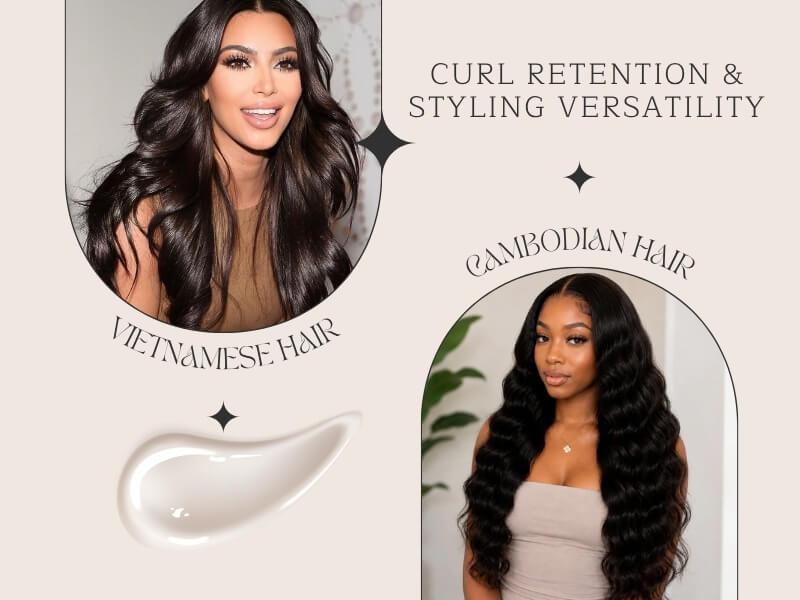
Hair that naturally resists becoming perfectly flat usually retains curls longer because its internal fiber structure provides greater mechanical support after heat styling. This is one reason why Burmese Hair has gained popularity among stylists working with textured hair markets. Meanwhile, Vietnamese Hair remains the preferred choice for clients who want sleek, flowing styles with minimal effort.
Supply Chain Depth
|
Cambodian Hair |
Vietnamese Hair |
Burmese Hair |
|
Village-based micro collectors |
Large integrated factories |
Small independent collectors |
|
Moderate monthly production |
High monthly production capacity |
Limited monthly production |
|
Medium reorder lead time |
Fast and predictable reorders |
Longer reorder lead time |
|
Moderate scalability |
Excellent scalability |
Limited scalability |
|
Higher stock-out risk |
Stable inventory availability |
Higher supply fluctuation |
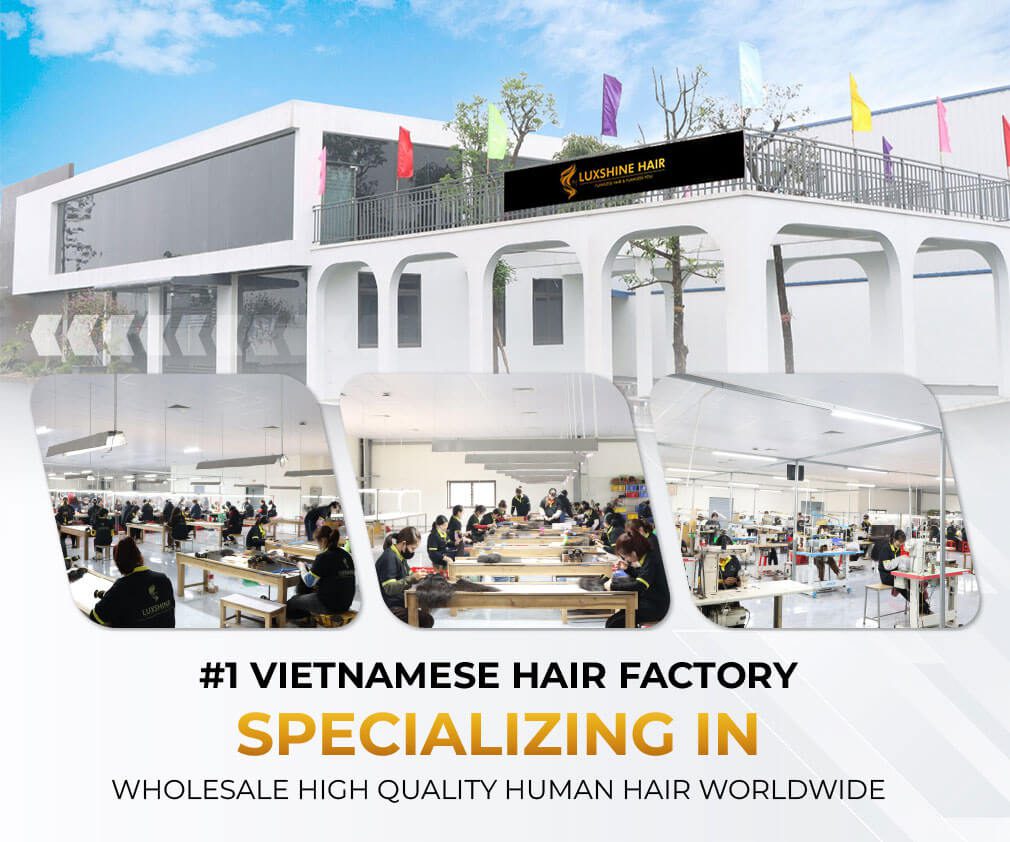
Vietnam has spent decades building a complete manufacturing ecosystem around the hair industry. Large factories employ hundreds of workers responsible for specialized tasks such as quality control, color processing, weft production, packaging, and export documentation.
Cambodian Hair follows a different model. Much of the supply comes from village collectors who sell to regional traders before reaching exporters. This decentralized structure creates a naturally smaller supply chain.
Myanmar’s ecosystem is even more fragmented. Premium Burmese Hair remains highly sought after because of its natural characteristics, but collection networks are smaller and export availability can fluctuate depending on local conditions.
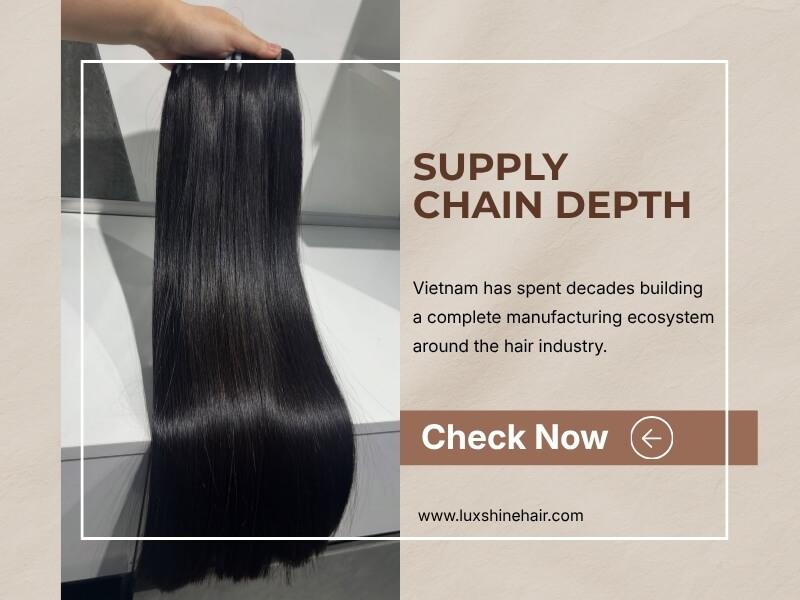
For boutique brands ordering 20 to 50 bundles each month, these differences may have little impact. However, once monthly demand reaches 300, 500, or even 2,000 bundles, supply chain maturity becomes one of the most important competitive advantages.
Batch Consistency
|
Cambodian Hair |
Vietnamese Hair |
Burmese Hair |
|
Moderate consistency between batches |
Highly consistent across reorders |
Greater variation between batches |
|
Depends on collector availability |
Controlled by factory grading |
Depends on seasonal collection |
|
Suitable for boutique brands |
Excellent for private label brands |
Better for limited collections |
Experienced wholesalers will never judge the quality of hair from the first batch. They will reset several times and evaluate the similarity between batches.
Vietnamese Hair is classified according to length, strand diameter, texture, and quality before production begins. This systematic approach makes repeat orders far more consistent.
Cambodian Hair depends more heavily on the availability of village-collected donors. As a result, one shipment may contain slightly finer strands, while the next may appear a little fuller.
Burmese Hair faces the same challenge, often to a greater degree because collection volumes are smaller and donor characteristics vary more widely.
For example, you launch a private label brand using an outstanding batch of premium Raw Hair. Your first customers love it. Six months later, you reorder from the same supplier. The new shipment looks similar at first glance, but the strands feel slightly different, bleach differently, and produce a different final appearance after installation.
From the customer’s perspective, your brand has become inconsistent. From the supplier’s perspective, the donor pool simply changed.
Verification Issues & Virtual Brokers
|
Cambodian Hair |
Vietnamese Hair |
Burmese Hair |
|
More broker-based suppliers |
Easier to verify manufacturers |
Limited verified factories |
|
Donor verification may vary |
Factory visits are more accessible |
Verification requires extra care |
|
Request donor videos before ordering |
Request production videos and QC process |
Verify export capability carefully |
|
Higher mislabeling risk |
Lower mislabeling risk |
Moderate mislabeling risk |
When sourcing Cambodian or Burmese Hair, I spent more time verifying the supplier rather than rushing to compare prices.
Ask questions that a genuine manufacturer can answer easily.
- Can you provide an unedited donor collection video?
- Can you show today’s production process?
- Can I see your warehouse inventory?
- Where is your factory located?
- Can you provide export documents for previous shipments?
- Do you own the production facility or purchase from collectors?

Some suppliers describe hair as “raw” simply because it has not been dyed, even if it has already undergone acid treatment or silicone coating.
True Raw Hair should retain its original cuticle alignment and undergo minimal processing before manufacturing.
Common warning signs:
- Refusing to provide sample orders.
- No factory address or only a virtual office.
- Product photos that appear identical to multiple competitors.
- Pressure to place large orders immediately.
- No recent production or warehouse videos.
- Unable to explain how donor hair is collected or graded.
Scarcity Premium vs Quality Premium
|
Cambodian Hair |
Vietnamese Hair |
Burmese Hair |
|
Higher scarcity value |
Higher operational value |
Highest rarity among the three |
|
Suitable for boutique collections |
Suitable for scalable wholesale |
Suitable for niche premium markets |
|
ROI is stronger at lower volumes |
ROI improves as order volume grows |
Best for specialty businesses |
|
Price fluctuates more |
More stable wholesale pricing |
Premium pricing due to limited supply |
One misconception I often hear is: “The rarer the hair, the better the business.“
No, rarity and profitability are not always the same thing.
I separate these concepts into two different types of value:
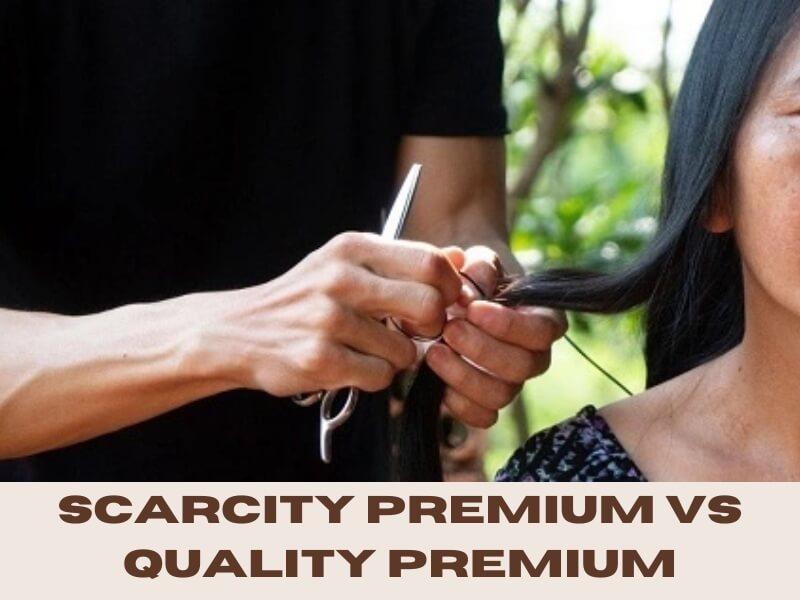
- Scarcity Premium – value created because supply is limited.
- Quality Premium – value created through consistent performance, stable inventory, and customer satisfaction.
For businesses purchasing around 50 bundles monthly, Cambodian and Burmese Hair hair may justify its premium positioning.
For businesses purchasing 200–500 bundles monthly, Vietnamese factories often provide stronger operational efficiency because pricing, inventory, and production become easier to manage.
The most profitable wholesalers rarely chase the rarest hair. They choose the supply chain that creates the fewest business interruptions.
Which Should You Choose? Cambodian vs Burmese hair vs Vietnamese Hair
There is no universal winner.
Each hair type serves a different business model. The best choice depends on your target customers, monthly purchasing volume, and long-term growth strategy.
|
Cambodian Hair |
Vietnamese Hair |
Burmese Hair |
|
Best for boutique brands selling exclusivity |
Best for wholesalers, distributors, and private label brands |
Best for salons specializing in textured or Afro-inspired styles |
|
Naturally full with soft body |
Naturally silky, smooth, and highly consistent |
Naturally thick with strong texture and volume |
|
Suitable for lower-volume premium collections |
Excellent for businesses planning to scale |
Ideal for niche premium markets |
|
Moderate production capacity |
High production capacity with reliable reorders |
Limited production with higher scarcity |
|
Buyers value uniqueness and rarity |
Buyers value consistency and operational stability |
Buyers value natural texture and exclusivity |
One of our partners in Europe purchases:
- Vietnamese Hair for private label extensions.
- Cambodian Hair for limited luxury collections.
- Burmese Hair for textured premium wigs.
Instead of choosing one country over another, they use each source where it performs best.

Your Questions Answered: Cambodian Hair vs Vietnamese Hair vs Burmese Hair
Which Hair is Better For Wholesale?
For most wholesalers, Vietnamese Hair is the better choice due to its stable quality, larger production capacity, and reliable reorders. Cambodian Hair and Burmese Hair are better suited for boutique or niche collections.
Which Source is Easier To Scale?
Vietnamese Hair offers the strongest scalability thanks to its factory-based manufacturing system. Cambodian and Burmese Hair have more limited supply.
Is Vietnamese Hair Good for Private Label Brands?
Yes. Its consistent quality and stable production make it an excellent choice for private label and OEM businesses.
What Monthly Volume Can I Expect?
Vietnamese factories can typically supply thousands of bundles per month. Cambodian suppliers usually offer moderate volumes, while Burmese Hair is the most limited due to its smaller collection network.
I’m Happy with My Vietnamese Supplier. Should I Switch?
Not necessarily. If your supplier consistently delivers quality and reliability, there’s little reason to change. Consider adding Cambodian or Burmese Hair only if your customers demand more variety.
Source Premium Vietnamese Hair with Luxshine Hair
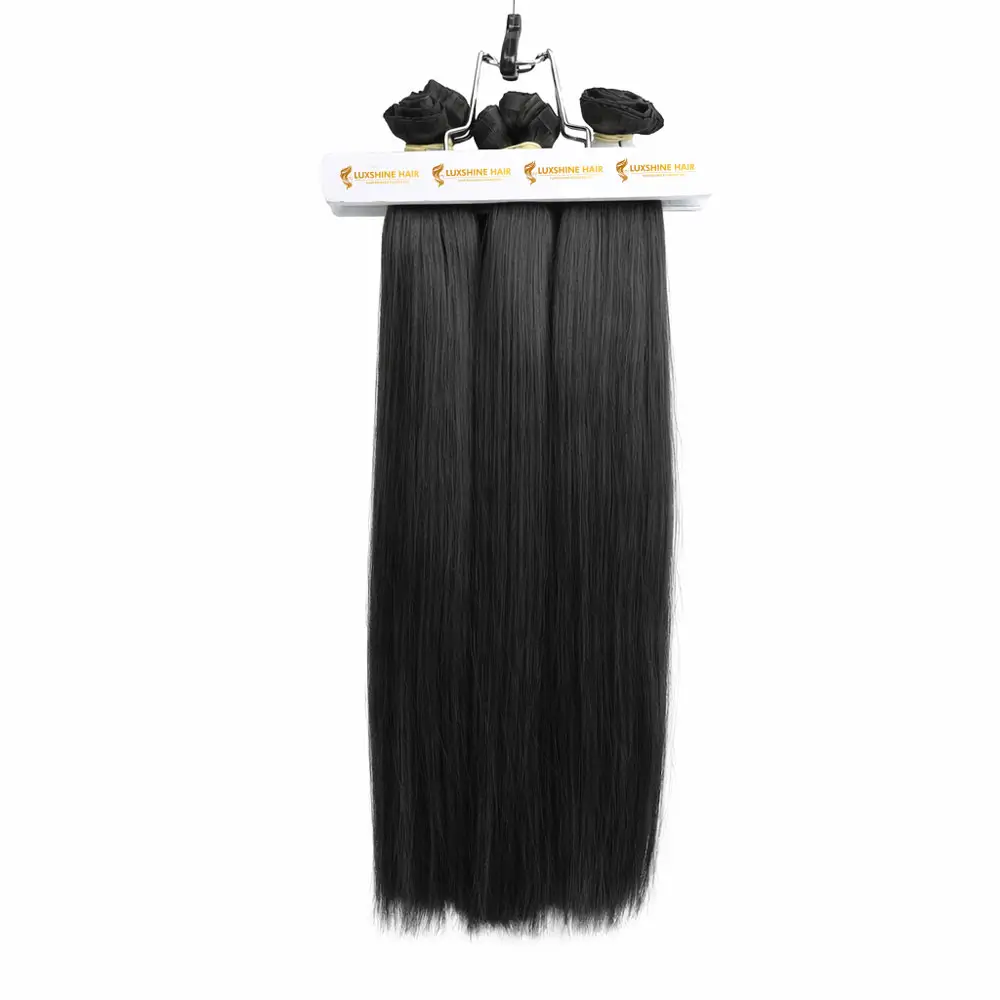
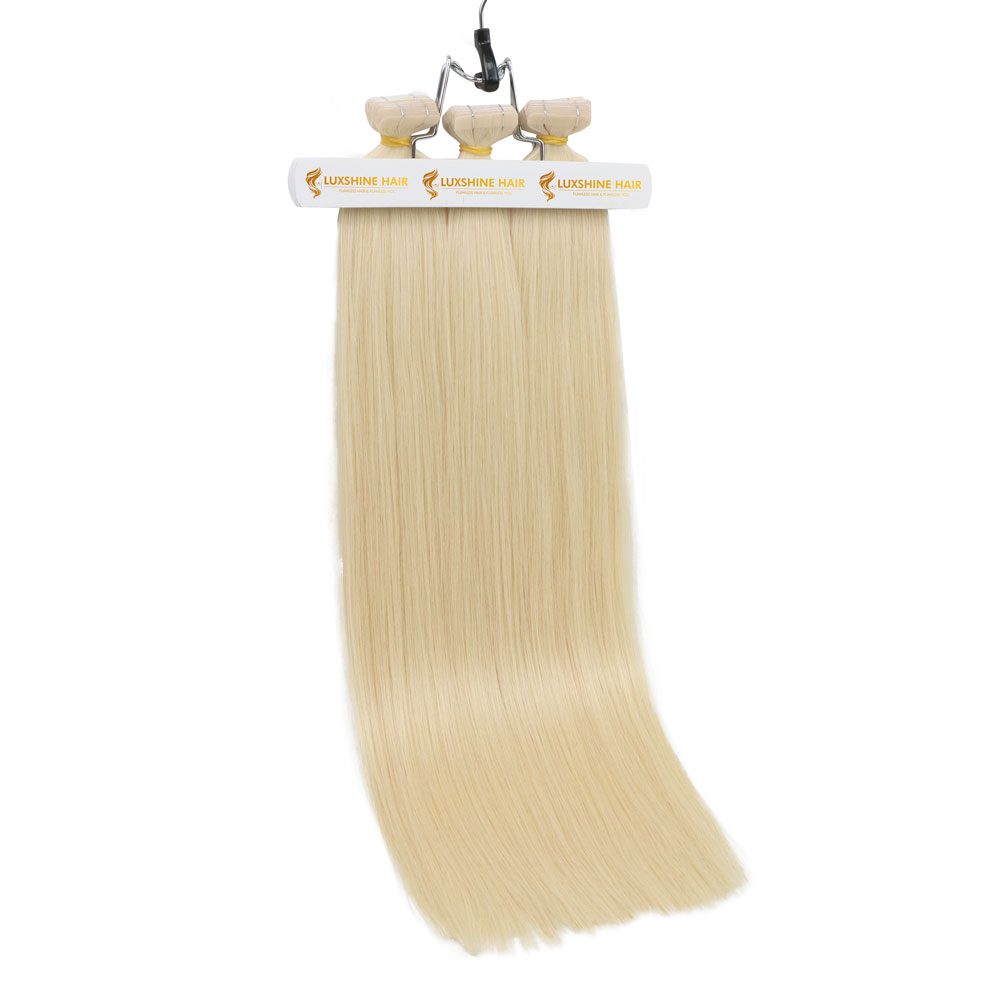
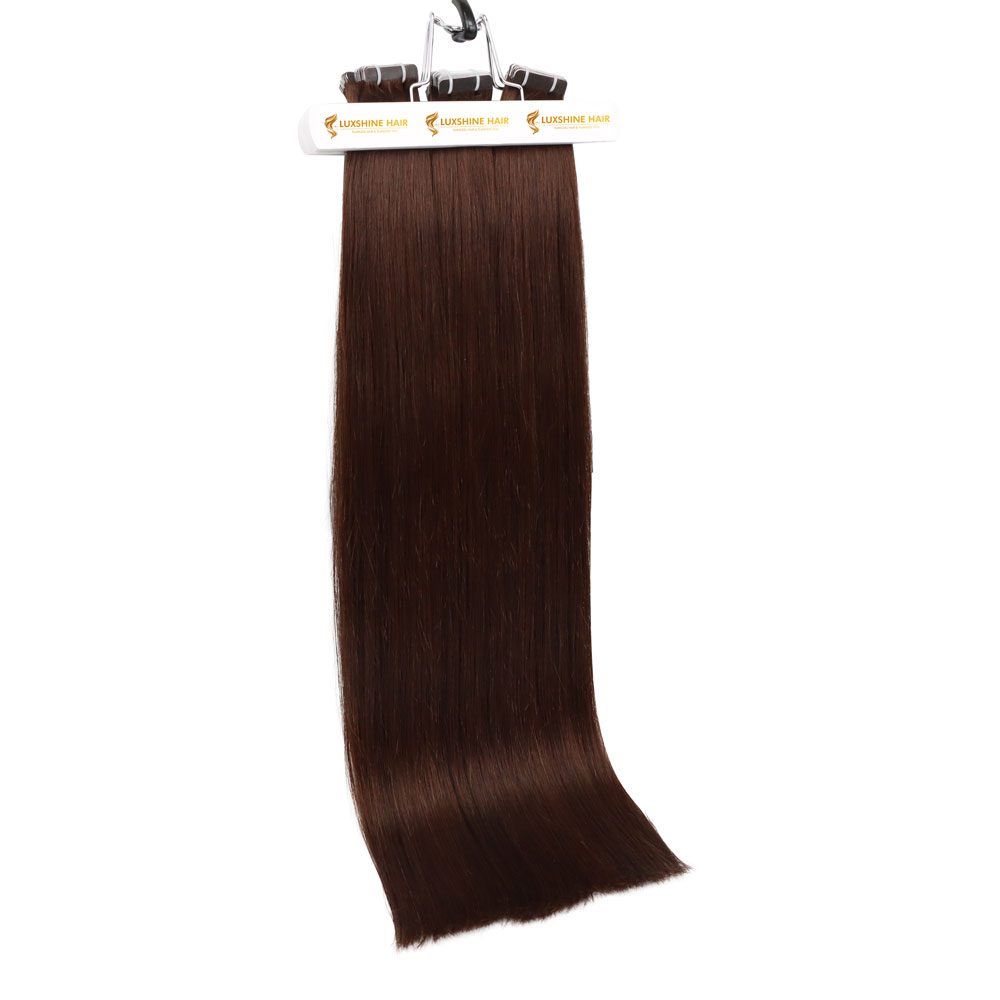
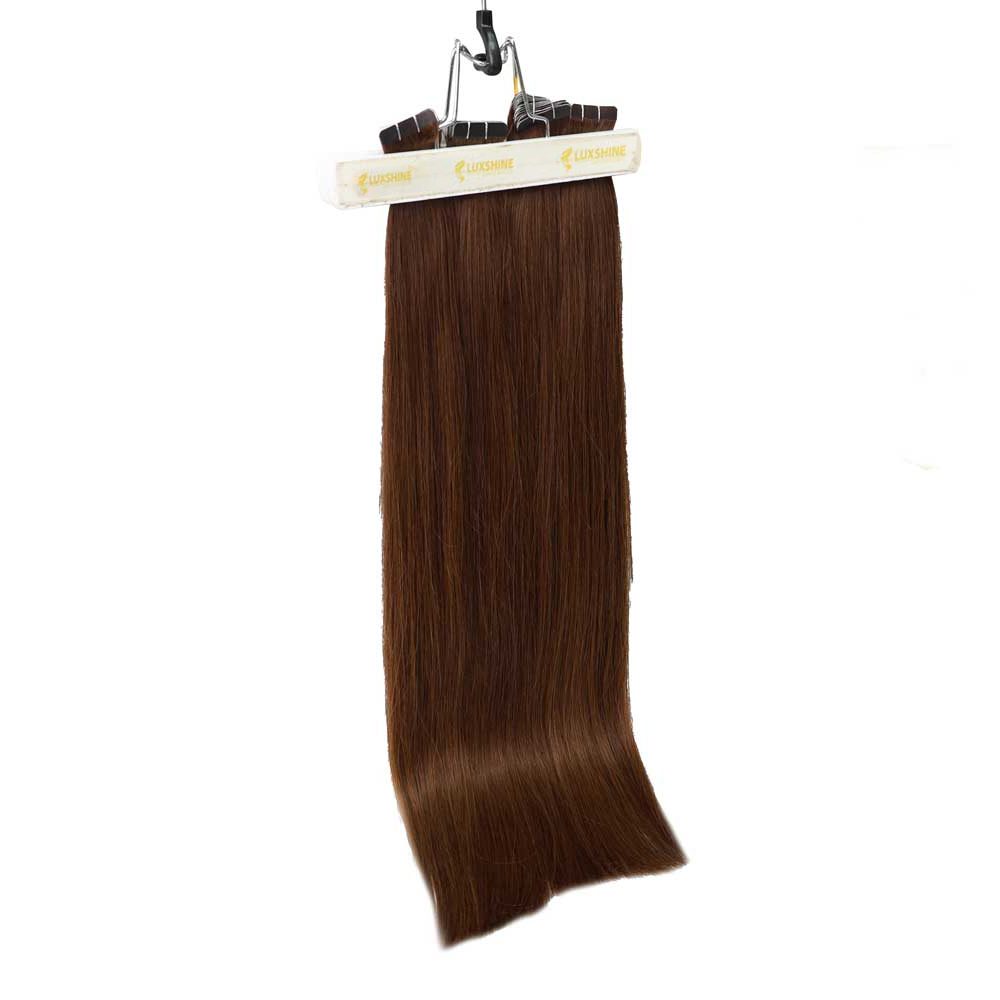
At Luxshine Hair, we have spent years helping wholesalers, salons, and private label brands source premium Vietnamese Hair with confidence.
Our vertically integrated manufacturing system combines carefully selected donor hair, strict quality control, experienced production teams, and reliable global shipping to help businesses grow without sacrificing consistency.
Whether you’re comparing Cambodian Hair vs Vietnamese Hair vs Burmese, or building a sourcing strategy that includes multiple premium origins, our team is here to provide honest advice based on your business goals, not just sell hair.
Contact Luxshine Hair today to request samples, discuss your sourcing needs, or learn how a trusted manufacturing partner can support your next stage of growth.

 Vietnamese Hair Extensions
 Best Selling Products
 About us
 Contact Us
 Wholesale Hair Vendor
 Luxshine Hair Blog